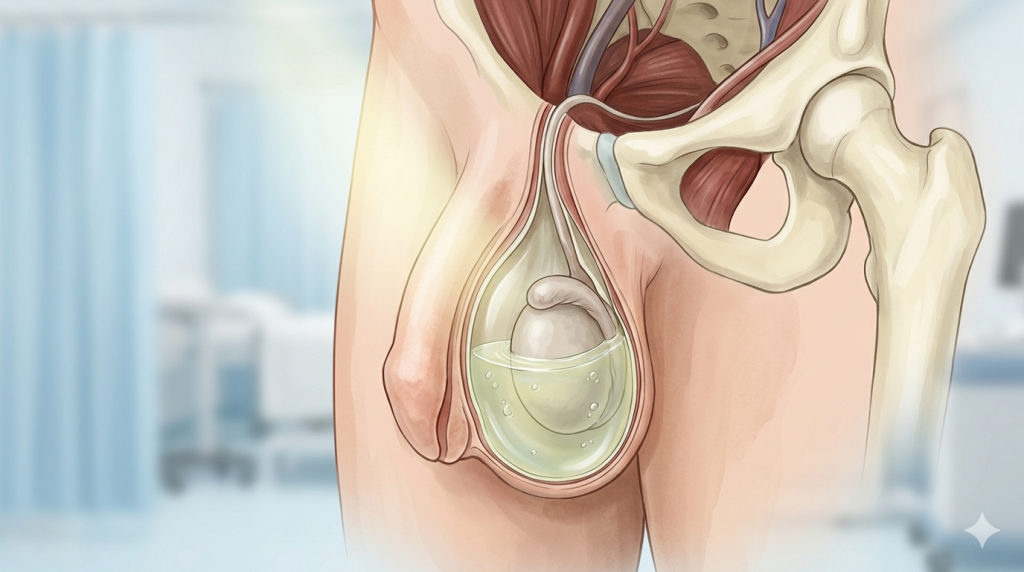
A hydrocele is a type of swelling in the scrotum that occurs when fluid collects in the thin sheath surrounding a testicle. While it is a common condition—especially in newborns—it can also develop in adult men due to inflammation or injury. Understanding the underlying causes and recognizing the symptoms is crucial for maintaining reproductive health and ensuring peace of mind.
What Exactly is a Hydrocele?
In simple terms, a hydrocele is like a small balloon of fluid trapped within the scrotum. It typically feels like a fluid-filled sac and can occur on one or both sides. While the swelling might look concerning, a hydrocele is generally painless and not inherently dangerous. It does not typically affect fertility, though it should always be evaluated by a healthcare professional to rule out more serious conditions like an inguinal hernia or testicular tumors.
Common Causes Across Different Ages
The development of a hydrocele depends largely on the patient’s stage of life.
1. In Newborns (Congenital)
During normal fetal development, the testicles descend from the abdomen into the scrotum through a tube called the processus vaginalis.
Non-communicating: In most cases, this tube closes, and the trapped fluid is absorbed by the baby’s body within the first year.
Communicating: If the tube remains open, fluid can flow back and forth between the abdomen and the scrotum. This type can change in size throughout the day depending on the baby’s activity level.
2. In Adults (Acquired)
For older men, a hydrocele usually develops as a secondary reaction to other issues, such as:
Inflammation or Infection: Conditions like epididymitis (inflammation of the small, coiled tube at the back of the testicle) can trigger fluid buildup.
Physical Injury: A direct blow to the scrotal area or trauma can cause the membranes to produce excess fluid.
Post-Surgery: Occasionally, surgeries for inguinal hernias can lead to a hydrocele as a side effect.
Recognizing the Symptoms
The primary sign of a hydrocele is a painless swelling of one or both testicles. Because the symptoms are often mild, many men ignore the condition until the swelling becomes physically awkward.
Heaviness: You might notice a dragging sensation or a feeling of weight in the scrotum.
Visual Changes: The scrotum may appear enlarged, smooth, and tense.
Minimal Pain: Usually, there is no sharp pain. If you experience sudden, severe pain, it may indicate a different medical emergency, such as testicular torsion.
When to See a Doctor
While a hydrocele itself isn’t a medical emergency, you should schedule an appointment if you notice any new scrotal swelling. A professional diagnosis is necessary to ensure the swelling isn’t caused by something more serious.
Seek immediate medical attention if:
The swelling appears suddenly and is accompanied by severe pain.
You develop a fever along with the swelling (this could indicate an infection).
The swelling is associated with nausea or vomiting.
An infant’s hydrocele does not disappear after the age of one or two.
Diagnosis and Treatment Options
Diagnosis
Doctors typically diagnose a hydrocele using transillumination. By shining a bright light through the scrotum, the physician can see if the light passes through clearly (indicating fluid) or is blocked (indicating a solid mass or hernia). An ultrasound may also be used to get a detailed view of the internal structures.
Treatment
Observation: For many infants and adults with small hydroceles, “watchful waiting” is the standard. Many cases resolve on their own.
Surgery (Hydrocelectomy): If the hydrocele is large, uncomfortable, or causing skin irritation, a surgeon can perform a minor procedure to drain the fluid and remove the sac.
Aspiration: For men who cannot undergo surgery, a needle can be used to drain the fluid, though the risk of the hydrocele returning is much higher with this method.
Conclusion & FAQ
Frequently Asked Questions
Q: Can a hydrocele cause infertility? A: Generally, no. A hydrocele is located outside the testicle and does not interfere with sperm production. However, if it is caused by an underlying infection, that infection might affect fertility.
Q: Is a hydrocele the same as a hernia? A: No, but they are related. A hernia involves a loop of intestine pushing through a weak spot in the abdominal wall, whereas a hydrocele is strictly a collection of fluid.
Q: Will it go away without surgery? A: In babies, yes, it often disappears within a year. In adults, it is less likely to disappear on its own if it was caused by injury or infection, though small ones may remain stable and harmless for years.
Summary: If you notice a change in the size or feel of your scrotum, don’t panic—but don’t wait. A quick check-up with a urologist can provide the diagnosis and treatment plan you need to stay healthy.