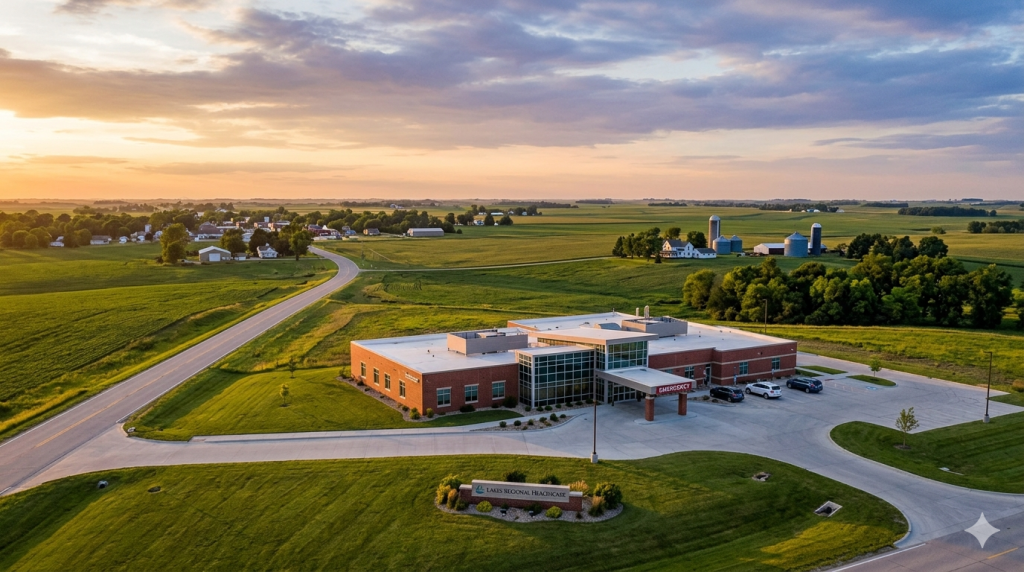
In a significant move to bolster the fragile healthcare infrastructure of rural America, a bipartisan group of U.S. Senators has officially introduced the Rural Community Hospital Demonstration Reauthorization Act. This legislative push aims to provide a “clean” five-year extension to a critical cost-based payment model that has served as a financial bedrock for dozens of rural hospitals across the country for over two decades.
The bill, spearheaded by Senators Chuck Grassley (R-Iowa) and Michael Bennet (D-Colo.), seeks to protect so-called “tweener” hospitals—facilities that are too large to qualify for the “Critical Access Hospital” (CAH) status but too small and isolated to survive under standard Medicare reimbursement rates.
The Survival of ‘Tweener’ Hospitals: Why This Extension Matters
For many Americans living in remote areas, the local hospital is not just a place for care; it is the difference between life and death. However, the economics of rural healthcare are notoriously difficult.
Standard Medicare payments often fail to cover the actual cost of providing care in low-volume areas. To address this, the Rural Community Hospital Demonstration (RCHD) was created in 2004. It allows participating hospitals with fewer than 51 beds to receive Medicare reimbursements based on the actual cost of providing inpatient services, rather than the fixed rates used for large urban systems.
What is a “Tweener” Hospital?
In the complex world of U.S. healthcare policy, “tweener” hospitals fall into a dangerous gap:
Too Big for CAH: They have more than 25 beds, disqualifying them from Critical Access Hospital status, which provides cost-based reimbursement.
Too Small for Scale: They have 50 or fewer beds, meaning they lack the patient volume to negotiate favorable rates or absorb the losses typical of the Prospective Payment System (PPS).
Without the RCHD program, these facilities face “digital darkness” and financial insolvency, potentially forcing millions of rural residents to drive hours for basic emergency services.
A Proven Track Record of Financial Stability
The program is currently capped at 30 participating hospitals, though more than 50 have cycled through the program since its inception. The latest evaluation from the Centers for Medicare and Medicaid Services (CMS) highlights the stark reality:
New participants received an average of $1.6 million more in Medicare funding annually.
Long-term participants saw an average boost of $2.7 million.
Jason Harrington, President and CEO of Lakes Regional Healthcare in Spirit Lake, Iowa, emphasized that this funding is not about profit—it’s about survival. “Through participation in the program, we have been able to maintain financial stability, reinvest in our facility, recruit and retain essential staff, and continue offering high-quality care close to home,” Harrington stated.
Despite this extra funding, CMS noted that many participants’ margins still do not reach a true “break-even” point, underscoring how vital every dollar of this “clean extension” is to the rural healthcare safety net.
Bipartisan Support in a Divided Congress
The introduction of this act comes at a time of heightened political tension, yet rural healthcare remains one of the few areas of consensus. The bill is co-sponsored by 14 other senators from both sides of the aisle, including leadership from the powerful Senate Finance Committee.
Senator Chuck Grassley, a co-founder of the original program 20 years ago, noted: “With a proven track record of more than two decades, this program gives eligible hospitals financial stability to keep healthcare close to home for Iowans.”
Senator Michael Bennet echoed this sentiment, warning of the consequences of inaction: “If Congress fails to extend this program, rural Coloradans could face longer drives, delayed care, and fewer options close to home.”
Industry Leaders Rally Behind the Bill
The American Hospital Association (AHA) and the National Rural Health Association (NRHA) have both issued strong endorsements. Lisa Kidder Hrobsky, AHA’s senior vice president for advocacy, pointed out that hospitals with 50 beds or less are among the “most vulnerable to closure” in the current economic climate.
The challenges cited by industry experts include:
Low Patient Volume: Fixed costs remain high even when beds aren’t full.
Sicker Populations: Rural residents often have higher rates of chronic illness.
Labor Shortages: Difficulty in recruiting specialized doctors and nurses to remote areas.
Payer Mix: A high reliance on Medicare and Medicaid compared to private insurance.
What’s Next for the Legislation?
The current program is set to expire at the end of June 2028, having been last renewed in the 2021 Consolidated Appropriations Act. By introducing a “clean extension” now—meaning a straightforward renewal without complex new requirements—lawmakers hope to provide long-term certainty to hospital administrators who must plan budgets and staffing years in advance.
If passed, the Rural Community Hospital Demonstration Reauthorization Act would secure the program through 2033, ensuring that “tweener” hospitals can continue to serve as the heartbeat of their communities.
Conclusion
The push to extend the Rural Community Hospital Demonstration is more than a policy debate; it is a fight for the viability of rural life. As hospitals across the U.S. grapple with inflation and workforce shortages, this bipartisan bill offers a rare glimmer of stability. By bridging the gap for “tweener” hospitals, Congress has the opportunity to prevent a wave of closures that would leave the most vulnerable Americans stranded without care.
Frequently Asked Questions (FAQ)
1. What is the Rural Community Hospital Demonstration (RCHD)? It is a Medicare program that tests cost-based reimbursement for small, rural hospitals that don’t qualify as Critical Access Hospitals. It helps these facilities cover the actual costs of care rather than receiving fixed, often lower, Medicare rates.
2. Which hospitals qualify for this program? Eligible hospitals must be located in a rural area, have fewer than 51 acute care beds, provide 24-hour emergency care, and not be designated as a Critical Access Hospital.
3. Why is it called a “clean” extension? A “clean” extension means the legislation proposes to continue the program exactly as it currently exists for another five years, without adding new regulations, changes to eligibility, or controversial policy riders.
4. How many hospitals are currently in the program? The program is currently capped at 30 participating hospitals. CMS recently filled 10 open slots to reach this capacity.
5. What happens if the program is not extended? Many participating hospitals have stated they would face immediate financial instability. This could lead to a reduction in services (such as closing maternity wards or emergency rooms) or total hospital closure, forcing rural residents to travel much further for medical care.