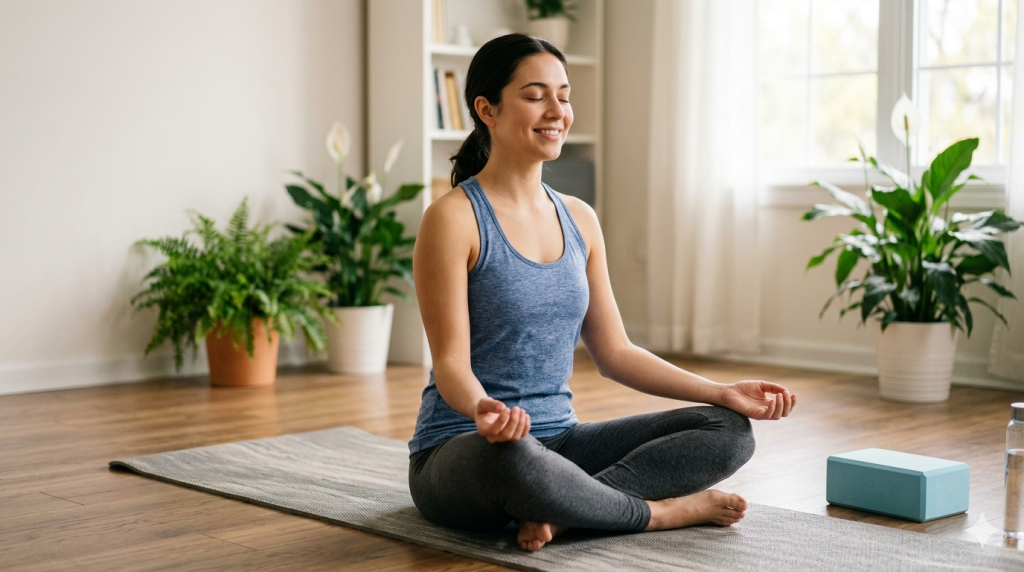
In a world obsessed with peak performance and picture-perfect results, we’ve accidentally turned yoga—a 5,000-year-old practice of inner peace—into another thing to be stressed about. We look at high-speed time-lapses of handstands and think, “I’m not built for that.” But here’s the secret that top instructors want you to know: Yoga isn’t about the pose; it’s about the person in it. If you feel awkward, stiff, or slightly out of balance, you aren’t doing it wrong. In fact, you’re doing it exactly right.
The “Flexible” Myth
The most common excuse for avoiding a yoga mat is: “I’m not flexible enough.” This is like saying you’re too dirty to take a bath.
Yoga isn’t a destination where you arrive once you can touch your toes; it is the process of loosening the tension that modern life—long commutes, desk jobs, and constant phone scrolling—locks into your joints. When you show up to a class as a “stiff” beginner, you actually have more to gain than the person who is naturally hyper-mobile. Every inch of progress you make is a victory for your nervous system.
3 Mindset Shifts for the Modern Beginner
Lower the Stakes: Your yoga mat is the one place in your life where you don’t have to be a “high achiever.” You don’t have to meet a quota, answer an email, or beat a personal record. If you spend 60 minutes just lying in Savasana (Corpse Pose) because that’s what your body needs, that is a successful session.
Focus on “Function” over “Form”: In the US, we often focus on what a pose looks like in the mirror. Instead, ask: What does this feel like? Is your lower back releasing? Is your chest opening up? If the “proper” form feels like it’s straining your joints, back off. A modified pose that feels good is infinitely better than a “perfect” pose that causes injury.
The 1% Rule: You don’t need a 90-minute daily practice. Five minutes of stretching before your morning coffee or three deep breaths during a stressful Zoom call is yoga. Small, consistent “micro-doses” of movement are the key to long-term mobility.
Tools of the Trade: Why Props are a Power Move
Many novices feel that using a block or a strap is “cheating.” In reality, props are like power steering for your body. They extend your reach and allow you to experience the benefits of a pose without compromising your alignment.
Blocks: Turn a stressful reach into a stable stretch.
Straps: Help you open your shoulders without rounding your back.
Bolsters: Transform a workout into a restorative experience for your nervous system.
The Longevity Benefit
We often talk about yoga in terms of “wellness,” but we should be talking about it in terms of longevity. As we age, we naturally lose muscle mass and bone density. Yoga provides gentle weight-bearing exercise and balance training that are critical for staying active and independent well into your 70s and 80s.
FAQ: Navigating Your First 30 Days
Q: I feel lightheaded during some transitions. Is that normal? A: It can be! This often happens if you move your head too quickly or if you are holding your breath. Move slower, stay hydrated, and ensure you are exhaling as you fold forward and inhaling as you rise.
Q: What should I wear? Do I need “Yoga Pants”? A: You just need clothes you can move in. Avoid anything too baggy that might fall over your face when you bend down, or anything too restrictive that prevents a full range of motion. Comfort beats fashion every time.
Q: How do I choose between a studio and an app? A: Studios are great for hands-on corrections and community. Apps (like Down Dog or Alo Moves) are perfect for privacy and fitting a session into a busy US work schedule. Try a mix of both to see what sticks.
Conclusion
Yoga is a practice of “unlearning.” You are unlearning the tension in your shoulders, the clutter in your mind, and the idea that you need to be perfect to be worthy of health. The next time you feel “bad” at a pose, smile. It means you are exactly where you need to be—at the beginning of a transformational journey.