We’ve all been there. You finish a delicious, seemingly healthy meal, only to feel like your midsection has been replaced by a literal beach ball twenty minutes later. Bloating isn’t just physically uncomfortable; it’s mentally draining. It dictates what clothes we wear, whether we feel up for evening social plans, and can even trigger a cycle of food anxiety.
While the wellness industry—valued at billions of dollars—is eager to sell you expensive “de-bloat” pills, digestive enzymes, and restrictive “detox” teas, top U.S. registered dietitians argue that we are overlooking the most effective, science-backed hack available. The best part? It costs zero dollars, takes only ten minutes, and requires absolutely no equipment.
The secret to beating the bloat isn’t just about what you eat—it’s about what you do the moment you put your fork down.
1. The Power of the “Digestive Stroll”
In modern American culture, we’ve developed a “finish and sit” habit. We transition straight from the dinner table to the couch, or from a desk lunch back to a computer chair. This sedentary behavior is the primary enemy of efficient digestion. When you remain stationary, your gastrointestinal (GI) tract slows down, allowing gas to become trapped and food to ferment longer than necessary.
The Fix: A 10-to-15-Minute Low-Intensity Walk
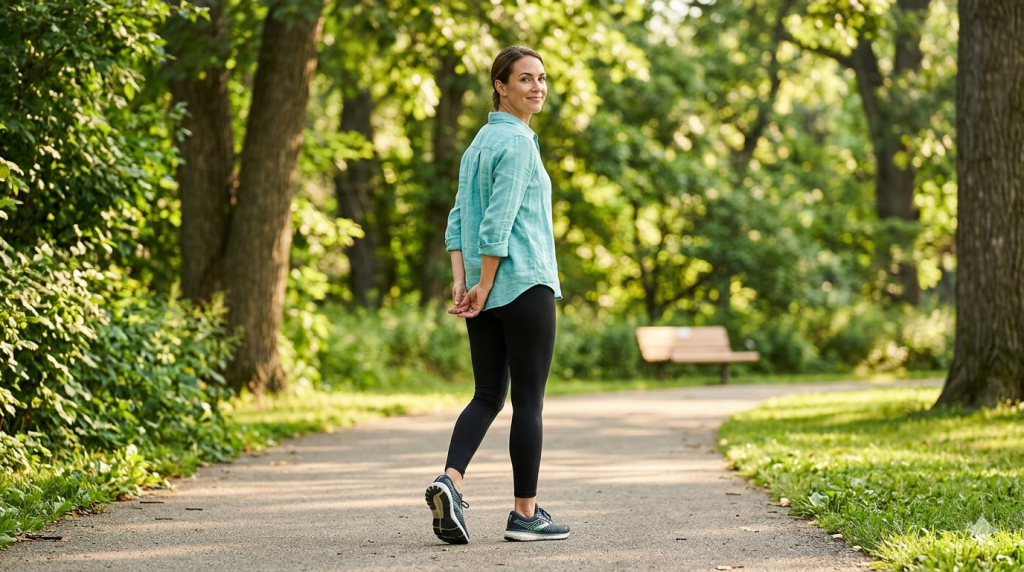
Scientific studies, including those published in Gastroenterology & Hepatology, show that light physical activity stimulates peristalsis—the wave-like muscle contractions that move food through the digestive system. By simply walking at a leisurely pace immediately after eating, you help clear gas from the stomach and move food into the small intestine faster, preventing that “heavy” feeling before it starts.
Crucially, this isn’t a power walk. High-intensity exercise right after a meal can actually divert blood away from the gut to the muscles, stalling digestion. Think of it as a “digestive stroll”—a gentle movement to wake up your internal plumbing.
2. Slow Down: Your Stomach Doesn’t Have Teeth
One of the most frequent causes of bloating in the U.S. is aerophagia, or the unconscious swallowing of air. In our high-speed world, we often eat while checking emails, driving, or scrolling through TikTok. This “distracted eating” leads us to gulp down air along with our food. Once that air enters the digestive tract, it has nowhere to go but down, leading to immediate distension and pressure.
The Fix: The 20-Chew Rule
Digestion begins in the mouth, not the stomach. Saliva contains an enzyme called amylase that starts breaking down carbohydrates the moment food enters your mouth. By chewing each bite roughly 20 to 30 times, you are mechanically breaking down food into a liquid-like state.
When you send a “smoothie-like” consistency to your stomach, the workload on your small intestine is significantly reduced. This means less fermentation by gut bacteria and, consequently, less gas production later in the day.
3. Activate the “Rest and Digest” Response
Your body has two main operating systems: the Sympathetic Nervous System (“Fight or Flight”) and the Parasympathetic Nervous System (“Rest and Digest”). If you eat while stressed, angry, or rushed, your body shunts blood flow away from the gut and toward your limbs to prepare for a perceived threat. This effectively “shuts down” your digestive factory, leaving food to sit and rot in the gut.
The Fix: Three Deep Belly Breaths
Before you take your first bite, pause. Take three slow, deep breaths through your nose, making your exhales longer than your inhales. This simple act stimulates the vagus nerve, the longest nerve in the body, which acts as a “reset button” for your nervous system. By signaling to your brain that it is safe to prioritize digestion, you ensure that the necessary enzymes and stomach acids are ready to go.
4. Hydration Strategy: Why Timing Is Everything
While staying hydrated is a cornerstone of health, how and when you drink water matters immensely for bloating. Chugging a massive glass of ice-cold water during a meal can dilute the hydrochloric acid (HCl) in your stomach. This acid is essential for breaking down proteins and killing off harmful bacteria. Without enough concentrated acid, food enters the small intestine under-digested, leading to—you guessed it—bloat.
The Fix: Hydrate 30 Minutes Before or After
Try to limit fluid intake during the actual meal to small sips. If you need something post-meal, reach for a cup of warm peppermint or ginger tea about 20 minutes after you finish. These herbs act as carminatives, which help relax the smooth muscles of the gut and allow trapped gas to pass through the system more easily.
5. Identifying the “Healthy” Culprits
Sometimes, the foods we think are the healthiest are actually the hardest on our digestive systems. Raw cruciferous vegetables, such as broccoli, Brussels sprouts, and kale, contain a complex sugar called raffinose. Humans lack the specific enzyme required to break raffinose down fully, leaving it for the bacteria in the large intestine to ferment.
The Fix: The “Cook Your Greens” Strategy
Steaming, sautéing, or roasting your vegetables “pre-digests” the fibers and breaks down the raffinose, making them much easier for your gut to handle. If you love salads, try a smaller portion of raw greens and pair them with cooked proteins and healthy fats to balance the load on your digestive tract.
FAQ: Navigating Your Digestive Health
Q: Should I take a probiotic to stop bloating immediately? A: Probiotics are excellent for long-term microbiome health, but they are rarely a “quick fix” for post-meal bloat. In fact, introducing new bacteria can sometimes increase gas for the first week as your gut adjusts. Focus on behavioral changes (like walking and chewing) first before relying on supplements.
Q: Why do I bloat even when I eat “clean” foods? A: “Clean” foods like beans, lentils, and cauliflower are high in FODMAPs (fermentable oligosaccharides, disaccharides, monosaccharides, and polyols). While these are incredibly healthy, they are rapidly fermented by gut bacteria. If you are sensitive, try soaking beans overnight or using a digestive aid like Beano.
Q: Is carbonated water okay during meals? A: If you struggle with chronic bloating, skip the sparkling water. You are essentially swallowing bubbles of CO2, which creates immediate pressure in the stomach. Stick to flat, room-temperature water for optimal digestion.
Q: Can stress really cause my stomach to stick out? A: Absolutely. The “gut-brain axis” is a powerful connection. Chronic stress can alter the gut microbiome and slow down “transit time,” leading to chronic distension regardless of what you eat.
Conclusion
Beating the bloat isn’t about buying into the latest “flat tummy” fad or cutting out entire food groups in a panic. It is about returning to the fundamental principles of human physiology. By honoring your body’s need for movement, mindful chewing, and a calm environment, you can enjoy your meals without the looming fear of discomfort.
The next time you finish a meal, don’t head for the sofa. Step outside for a 10-minute walk. Your gut—and your waistline—will thank you.