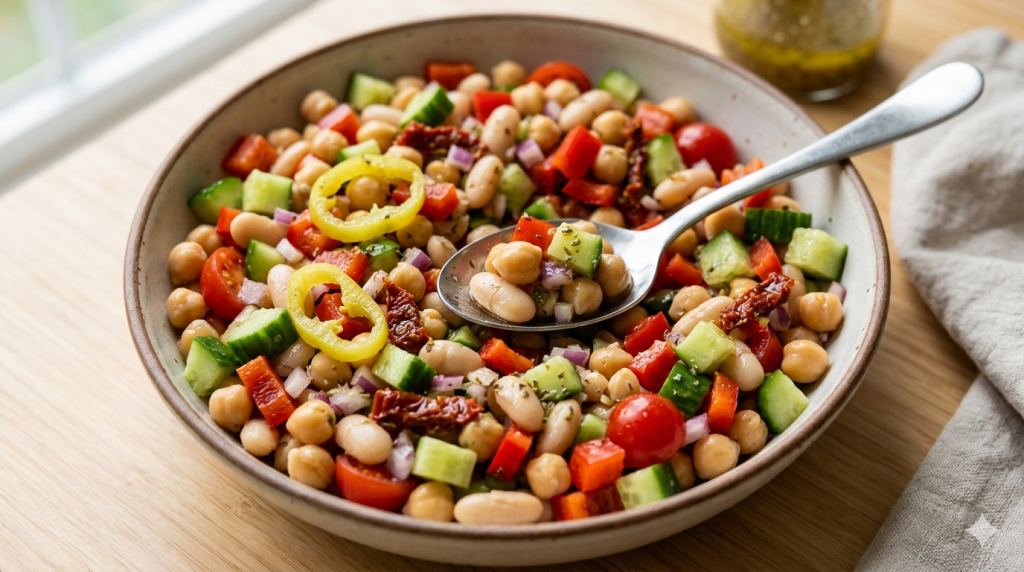
In the modern landscape of digital wellness, food trends come and go with the speed of a swipe. However, one culinary movement has managed to transcend the ephemeral nature of TikTok to become a legitimate staple in American kitchens: the Dense Bean Salad (DBS). Pioneered by creator Violet Witchel, this isn’t just another salad; it is a meticulously engineered approach to nutrition, convenience, and satiety that has captured the attention of millions across the United States.
As first reported by Fit&Well, the DBS has become the new “Holy Grail” of meal prepping for the busy professional. By challenging the traditional definition of what a salad can be, Witchel has provided a blueprint for delicious, sustainable, and highly efficient eating in 2026. But what makes this specific bean salad so special, and why has it become the most popular recipe in her extensive repertoire?
The Anatomy of “Density”: Why This Salad is Different
Traditional salads often rely on leafy greens like arugula, kale, or romaine. While healthy, these greens have a major drawback: they wilt. Within hours of being dressed, they turn into a soggy, unappetizing mess. The “Dense Bean Salad” flips the script by removing the fragile leaves entirely.
The Hardy Base
Instead of lettuce, the DBS centers on robust ingredients: canned chickpeas, cannellini beans, or navy beans. These legumes are hearty, nutritious, and incredibly durable. They don’t just “last” in the fridge; they improve. The dense, porous nature of the beans allows them to marinate, absorbing the vinaigrette over time, making a salad on Day 4 significantly more flavorful than it was on Day 1.
Satiety Over Size
The “density” in DBS refers to both nutrient density and satiety. Traditional salads often require massive portions to feel full. The DBS offers complex carbohydrates and high-quality plant-based protein in a compact form. It keeps you satisfied for hours, eliminating the common critique that salads are just “rabbit food.”
The “Most Popular” Recipe: A Step-by-Step Breakdown
While Witchel has released dozens of variations, including a Mediterranean-inspired mix and a “Grinder-style” using deli meats, one particular formula consistently rises to the top as the fan favorite. This specific recipe balances vibrant acidity with a deep, savory umami that hooks followers. Here is how to construct the viral masterpiece at home.
The Vinaigrette: The Soul of the DBS
The magic always starts with the dressing, which requires an optimal blend of fat, acid, and strong aromatics.
Oil & Vinegar: Use a high-quality extra virgin olive oil and a bright vinegar like Red Wine or Apple Cider.
The “Secret” Spice Blend: Witchel frequently utilizes a robust mix of dried oregano, garlic powder, onion powder, and crucial dried basil.
The Acidity Hack: A non-negotiable step is adding a splash of the brine from the pickled banana pepper jar directly into the vinaigrette.
The Crunchy Medley: Textural Mastery
A core tenet of the DBS is “crunch.” Every ingredient is finely, uniformly diced, ensuring a perfect textural mix in every spoonful.
Finely Diced Persian Cucumbers: These provide the necessary fresh crunch.
Sun-Dried Tomatoes: For chewy sweetness.
Red Onions: For sharp color and bite.
Pickled Elements: Banana peppers or pepperoncinis add a crucial spicy-sour punch.
The Assembly and Marination
Rinse and drain two cans of beans thoroughly. Combine with the chopped vegetables and a savory protein like diced salami or grilled chicken (if desired). Pour the vinaigrette over the top, toss, and—crucially—let it marinate for at least 30 minutes before the first serving.
Why It Is Dominating Google Discover in 2026
The surge in interest for the Dense Bean Salad is a perfect convergence of cultural, economic, and wellness trends currently defining the American perspective on food in 2026.
Cost-Effectiveness: With food inflation still a concern, beans remain one of the most affordable sources of comprehensive nutrition available. A batch that provides four days of lunches often costs less than a single takeout meal.
The Satiety Solution: People are realizing that 600 calories of leafy greens do not offer the same sustained energy as 600 calories of fiber-rich legumes and vegetables.
Zero-Waste Approach: In an increasingly environmentally-conscious society, the durability of the DBS means almost zero food is thrown away, appealing to the waste-reduction goals of Gen Z and Millennial consumers.
Conclusion: Changing the Lunchbox Paradigm
Violet Witchel’s Dense Bean Salad is more than just a passing trend; it is a structural rethink of the modern lunch. By prioritizing durability, protein density, and intense flavors, she has provided a blueprint for healthy eating that actually fits into a frantic, modern lifestyle. It is a testament to the power of simple, hardy ingredients, proving that a truly great meal doesn’t need air to be “light,” it just needs to be “dense.”
Frequently Asked Questions (FAQ)
1. How long does the Dense Bean Salad stay fresh in the fridge?
Unlike traditional salads, the DBS actually improves with time. When stored in an airtight glass container, it typically stays fresh and crunchy for 4 to 5 days.
2. Can I make this salad vegan?
Yes, easily. The base of the salad (beans and vegetables) is already plant-based. Simply use a savory vegan alternative for the cured meat, such as smoked tofu cubes or additional sun-dried tomatoes, and ensure your vinaigrette doesn’t contain honey.
3. Why is it called “Dense”?
The term refers to the nutrient density of the ingredients and the physical weight of the food. It is packed with fiber and protein, offering high satiety in a compact serving size, with no “filler” like lettuce or air.
4. Are canned beans as nutritious as dried beans?
Yes, canned beans retain the vast majority of their nutritional value, including fiber and protein. To reduce sodium, choose “low sodium” cans and rinse them thoroughly for at least 30 seconds under cold water, which removes up to 40% of the remaining salt.
5. Can I freeze the DBS?
It is not recommended to freeze this salad. The fresh vegetables, like cucumbers and peppers, have a high water content. Freezing breaks down their cellular structure, and when thawed, they lose their crucial “crunch,” resulting in a mushy texture.