While the wellness industry spends billions marketing “gut-healing” powders and restrictive elimination protocols, registered dietitians are pointing to a much simpler, mechanical solution. The most effective way to stop bloating after you eat isn’t what you consume—it’s the pace at which you consume it.
We have all been there: finishing a delicious dinner only to feel like a balloon is inflating in our midsection ten minutes later. For many, this post-meal distension is so common it’s considered “normal.” However, according to clinical nutrition experts, this discomfort is often a direct result of our modern, high-speed lifestyle rather than a specific food allergy.
The Science of “Slow”: Why Your Pace Matters
Registered dietitian Clementine Vaughan emphasizes that while “what” we eat—protein, fiber, and healthy fats—is crucial for long-term health, the “how” is what determines our immediate comfort. When we rush through a meal, we bypass the very first stage of the human digestive process.
Digestion is not a process that begins in the stomach; it begins in the mouth. By the time food hits your esophagus, it should already be significantly broken down by mechanical chewing and chemical enzymes. When we eat quickly, we disrupt this biological flow, leading to several physiological issues that manifest as bloating.
Three Ways Rapid Eating Triggers Bloat
1. The Gulping Effect (Aerophagia)
When you eat quickly, you aren’t just swallowing food—you are swallowing air. This medical phenomenon, known as aerophagia, causes gas to collect in the stomach. Unlike gas produced by fermentation in the intestines, this air creates immediate, sharp pressure in the upper abdomen, leading to that “tight” feeling and excessive belching.
2. The Digestive Backlog
Chewing serves as a signal to your stomach to begin producing gastric juices. When food arrives too quickly and in large, un-chewed chunks, the stomach is caught off guard. This results in food sitting in the digestive tract for longer periods, where it begins to ferment and produce internal gases, causing lower abdominal distension.
3. The Satiety Lag
There is a significant time delay (about 20 minutes) between the stomach being physically full and the brain receiving the “stop eating” signal. If you finish a meal in under ten minutes, you will likely overeat before your brain can tell you to stop. This physical over-stretching of the stomach is a primary driver of post-meal lethargy and bloating.
5 Expert Strategies to Slow Your Roll
Changing a lifelong habit of fast eating requires conscious effort. Here are five dietitian-approved methods to help you slow down:
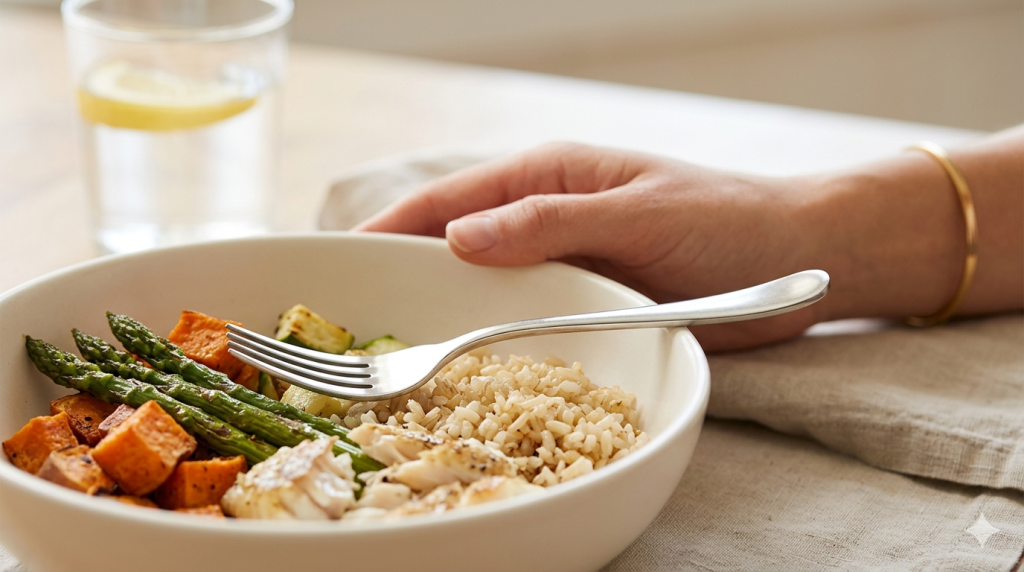
The “Fork-Rest” Rule: Physically place your fork or spoon on the table after every single bite. Do not pick it back up until you have completely swallowed and taken a breath. This breaks the habit of “loading” the next forkful while still chewing the current one.
The 30-Chew Target: Aim for 30 chews per mouthful. While you don’t need to count every single time, practicing this for the first few bites of every meal trains your jaw and brain to recognize what “properly chewed” food feels like.
Hydrate Mindfully: Take small sips of water between bites. This creates a natural pause in the rhythm of the meal and helps the fiber in your food move more smoothly through your digestive system.
Minimize Distractions: Avoid “scrolling and swallowing.” When you watch TV or look at your phone, your brain is focused on the screen rather than the physical sensations in your mouth and stomach. This leads to mindless, rapid eating.
Extend Your Meal Time: Use a timer to ensure your meal lasts at least 20 minutes. If you find yourself finished in ten, use the remaining ten minutes to sit quietly or engage in conversation, allowing your digestion to settle before moving on to the next task.
The Psychological Benefit: Rediscovering Food
Beyond the physical relief of a flatter stomach, eating slowly has profound psychological benefits. It allows you to actually taste and enjoy the food you’ve prepared, turning a chore-like “refueling” session into a mindful experience. This practice, often called Mindful Eating, has been shown to reduce stress levels and improve our overall relationship with food.
Conclusion
You don’t always need an expensive probiotic or a restrictive diet to fix your gut health. Sometimes, the most transformative health “hack” is simply to breathe and slow down. By giving your body the time it needs to process what you’ve given it, you can turn mealtimes back into a source of energy rather than a source of discomfort.
FAQ: Mastering Your Digestion
Q: Can certain healthy foods cause bloating even if I eat slowly? A: Yes. High-fiber foods like beans, lentils, and cruciferous vegetables (broccoli, cauliflower) are notorious for causing gas as they are broken down by gut bacteria. The key is to introduce these foods gradually and stay hydrated.
Q: Does it matter what I drink during a meal? A: Absolutely. Carbonated beverages—including sparkling water—introduce CO2 directly into your digestive system, which can exacerbate bloating. Stick to still water or herbal teas.
Q: Is there a specific “post-meal” movement that helps? A: A 15-minute “digestive walk” at a slow pace is highly recommended. Light movement helps stimulate the muscles of the digestive tract, encouraging gas and food to move through more efficiently.
Q: When should I be worried about my bloating? A: If your bloating is accompanied by severe pain, fever, unintended weight loss, or a significant change in bowel habits, you should consult a medical professional to rule out conditions like Celiac disease or IBD.