The modern wellness movement has crowned fermented foods as the undisputed kings of the microbiome. From the pungent crunch of kimchi to the acidic tang of kombucha, these “living” foods are marketed as the ultimate cure-all for digestive woes. However, for a significant group of people, these probiotic powerhouses lead to a biological battlefield of bloating, skin rashes, and brain fog.
If your digestive system rebels against fermented products—perhaps due to Histamine Intolerance or Small Intestinal Bacterial Overgrowth (SIBO)—you aren’t excluded from the gut health revolution. You simply need a more tailored strategy. Building a resilient microbiome isn’t just about adding new bacteria; it’s about feeding the ones you already have with gentle, effective nutrients.
Here are five superior, science-backed alternatives to support your gut without the fermentation fallout.
Why “Good” Fermented Foods Can Feel “Bad”
To fix the gut, we must understand the friction. Fermentation creates biogenic amines, most notably histamine. If your body is low on the DAO enzyme (which breaks down histamine), eating sauerkraut is like pouring gasoline on an inflammatory fire. Furthermore, those with SIBO often find that adding more live cultures to an already congested small intestine creates excessive gas and pressure.
Fortunately, your gut lining and microbial diversity can thrive using these five strategies that bypass the fermentation process entirely.
1. Soluble Fiber: The Gentle Engine of Growth
Think of probiotics (live bacteria) as the workers and prebiotics (fiber) as their paycheck. For sensitive systems, soluble fiber is the gold standard. It dissolves in water to form a soothing, gel-like substance that nourishes beneficial microbes without the aggressive fermentation speed of raw cabbage.
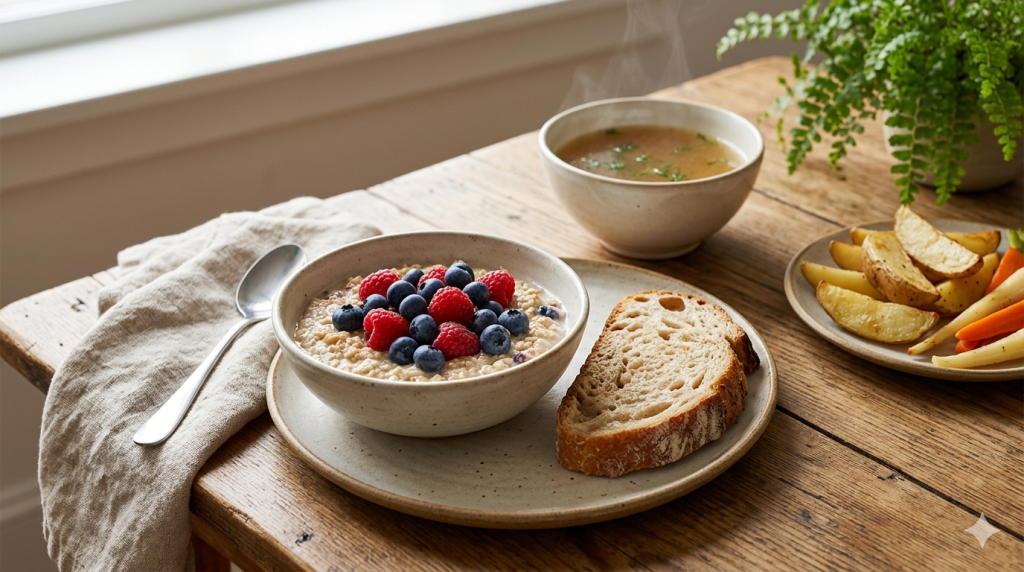
Oat Beta-Glucan: This specific fiber found in oats is a favorite of Bifidobacterium, a key species for immune regulation and gut barrier integrity.
Chia Seeds: Capable of holding 12 times their weight in water, chia seeds provide “hydrophilic” support, ensuring the stool stays hydrated and moves through the colon effortlessly, preventing the stagnation that breeds “bad” bacteria.
The Strategy: Incorporate a daily bowl of “low and slow” fibers like overnight oats or chia pudding to stabilize your transit time.
2. Polyphenol-Rich Berries: The Selective Fertilizer
Berries are more than just antioxidants for your skin; they are a sophisticated “fertilizer” for your gut. Berries contain polyphenols—plant compounds that largely escape digestion in the small intestine, arriving in the colon mostly intact.
Once there, they act as selective prebiotics. They discourage the growth of pathogenic bacteria like Staphylococcus while providing a feast for “lean” bacteria associated with healthy metabolism.
Wild Blueberries: Rich in anthocyanins that have been shown to dampen gut-specific inflammation.
Raspberries: They offer a unique “one-two punch” of high fiber and high polyphenol content.
Pro-Tip: The darker and more vibrant the berry, the higher the polyphenol concentration. Think blackberries and blackcurrants for maximum impact.
3. Bone Broth: Restoring the “Great Wall” of the Gut
If your gut is hyper-reactive, the problem might be a compromised intestinal barrier (commonly known as Leaky Gut). When the “tight junctions” of your gut wall loosen, toxins and undigested food particles leak into the bloodstream, causing systemic havoc.
Bone broth is packed with collagen, glycine, and glutamine. Glutamine is the primary fuel source for the cells (enterocytes) that line your small intestine. Consuming bone broth is essentially providing the raw “construction materials” to patch the holes in your gut wall.
Pre-Digested Nutrition: Unlike raw kale or fermented kraut, the nutrients in bone broth are liquid and require almost zero digestive effort to absorb.
Soothing Effect: The gelatin in broth helps restore a healthy mucosal layer, which protects the gut wall from irritation.
4. Resistant Starch: The Butyrate Producer
This is the “holy grail” for those who can’t handle probiotics. When you cook a starchy food like a potato or white rice and then allow it to cool completely, a chemical shift called retrogradation occurs. This creates Resistant Starch (RS).
RS acts like fiber; it “resists” digestion and travels to the large intestine where it is fermented by your resident bacteria into Butyrate.
The Power of $Butyrate$: This short-chain fatty acid is the literal lifeblood of your colon cells. It reduces inflammation, strengthens the gut barrier, and has even been linked to improved mental clarity via the gut-brain axis.
The Strategy: Eat your potatoes or rice pre-cooked and chilled (like in a Mediterranean-style potato salad). Even if you reheat them later, much of that beneficial starch remains “resistant.”
5. Steamed Root Vegetables: Easy-to-Process Prebiotics
Raw cruciferous vegetables (broccoli, cauliflower) can be a nightmare for a sensitive gut due to their complex sugars and high sulfur content. Root vegetables like carrots, parsnips, and sweet potatoes offer a much gentler path to fiber intake.
When steamed until soft, these vegetables provide pectin and other fibers that are mechanically easier for your gut to handle. They are also high in Beta-Carotene (Vitamin A), which is essential for the health of the mucosal membranes throughout the digestive tract.
Carrots: Contain unique fibers that can help bind to and remove endotoxins from the gut.
Sweet Potatoes: A rich source of soluble fiber that supports a steady, healthy microbiome without the gas.
Conclusion: Rethinking Gut Diversity
You do not need to endure digestive pain for the sake of “health.” A thriving microbiome is built on the foundation of diversity, not just intensity. By focusing on soluble fibers, polyphenols, and gut-repairing amino acids, you can achieve a level of digestive health that is both robust and comfortable.
Listen to your body’s signals. If fermented foods aren’t working for you right now, pivot to these five science-backed pillars. A calm gut is a healthy gut.
Frequently Asked Questions (FAQ)
Q: Can I ever go back to eating fermented foods?
A: Yes! Often, once you heal the gut lining with bone broth and build a stable microbial base with soluble fibers, your tolerance for histamines improves. Reintroduce them in tiny amounts—think one teaspoon—once your symptoms have stabilized for several weeks.
Q: Are probiotic supplements better than fermented foods for sensitive guts?
A: They can be, because you can control the specific strains. Look for “histamine-neutral” or “histamine-clearing” strains like Bifidobacterium longum rather than broad-spectrum formulas that might contain histamine-producing Lactobacillus strains.
Q: Does cooking the vegetables destroy the prebiotics?
A: Not at all. While heat can destroy some Vitamin C, the fiber and minerals remain intact. For a sensitive gut, the benefits of making the food easier to digest far outweigh the minor loss of heat-sensitive vitamins.
Q: How quickly will I feel a difference?
A: Most individuals reporting “fermentation sensitivity” feel a significant reduction in bloating within 7 to 10 days of switching to a cooked-vegetable and soluble-fiber-focused diet.